|
 |
||||||||||||
 |
|||||||||||||
 |
|
||||||||||||
 |
|||||||||||||
Torque-Power Big Paw Block + Engine Part 2 |
 |
||||||||||||
 |
|||||||||||||
 |
|||||||||||||
 |
|||||||||||||
 |
|||||||||||||
TORQUE ABOUT POWER For some years now, local company Torque-Power has been building a solid reputation for turning out performance manifolds that really do work. On any given day it’s not difficult to find one of the company’s products bolted to a hot Holden engine on a dyno somewhere around the country. It’s also fairly well known that Torque Power has been developing an unusual hybrid engine that combines features of the locally popular Holden V8, and the iconic small-block Chevrolet. Finally, the wait is over. Most of the work on the project is done and here’s the first glimpse of the results. While news of the project has created eager anticipation among most people, some have questioned the logic of making this engine. Why not just build a Chev, they ask? There are a number of reasons. Company owner, Craig Bennett, (no relation to Dave) points out that both Holden V8 and Chev engines have their problems, but also that each has important advantages. |
|||||||||||||
 |
|||||||||||||
 |
|||||||||||||
 |
 |
||||||||||||
 |
|||||||||||||
 |
|||||||||||||
 |
|||||||||||||
 |
|||||||||||||
 |
|||||||||||||
 |
|||||||||||||
 |
|||||||||||||
 |
|||||||||||||
 |
|||||||||||||
 |
|||||||||||||
 |
“It’s just been a matter of combining the good points of both engines and getting rid of the bad points”, he says. The small-block Chev has been the subject of intense development for decades. Consequently, almost every performance product you can imagine has been created for it and is readily available off the shelf in the US and locally. The fact that the Holden V8 was only ever produced for our relatively limited market means that it hasn’t had as much research and development as the Chev. Craig points out that this is a shame because it means the excellent features designed into the Australian engine have never been fully appreciated. |
||||||||||||
| WE
GOT IT RIGHT
One of the best features of the Holden engine is the heads. Conversely, Craig considers this to be one of the worst features of the American motor. “Look at the evolution of the Chev”, he says. “The original valve angle was 23 degrees. Then, for extra performance, it went to 18 degrees. Aftermarket head manufacturers continued the trend and straightened it up even further to around 15 degrees. In the latest LS7 engine the figure is 12 degrees.” He continued, “Look at the Holden. It’s had six degree valves since it was first manufactured!” In addition to the valve angles there’s also the superior configuration of the uniform port layout adopted in later Holden heads. In creating this engine Craig has sought to make the vast range of components available for the Chev directly useable in a Holden. That’s certainly good thinking, but it’s far from the only reason for the combination.
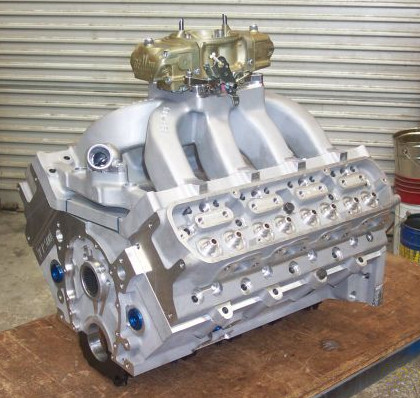
Although turbochargers have vastly improved the outputs of smaller displacement engines, increased cubic capacity still defines the basic path to greater power. Because the Torque-Power block is a fresh design unhampered by OE production and marketing constraints, it’s been produced with maximum cubic capacity in mind. The basic small-block configuration means that bore size is limited so the only other means of increasing capacity is a longer stroke. Consequently, everything in this engine has been optimised for big crankshafts. The pan rails are set about an inch further apart and the camshaft is also positioned higher than standard so that cranks defining strokes as long as 4.500 inches will turn without the need to modify the block. Raising the cam does create the need for a non-standard timing set but this is readily available as an inexpensive aftermarket Chev component. The bores can be opened out to 4.200 inches and doing so in combination with a 4.5 inch stroke creates a displacement just a whisker under 500 cubic inches. Keep in mind that this is a small-block which will drop straight into any application that can take a Holden block. The new
block will be available in 9.000 and 9.500 inch deck heights for optimising
your package and the taller version will allow rod lengths of up to
6.500 inches with the maximum stroke crank. Other displacements available
with off the rack parts are 434, 455, 464, 472 and 488 cubic inches.
The fact that all these things can be achieved with readily available
components is another reason that the block is a good idea. For instance,
a Howard non-twist forged crank, Howard rods and Probe forged race series
pistons can be had for around $3200. This is, in fact, the combination
Craig is using to turn out the first 464 cubic inch version of the motor.
Similar components for a Holden can cost around $5000 but even with
such components a VN block is still limited to 383 cubic inches. This
brings up the matter of relative costs. |
|||||||||||||
| COST
BENEFIT ANALYSIS
Considering the basic cost of the Torque-Power block in isolation can make it seem expensive but this is somewhat misleading. At around $9000 the initial cost is certainly much greater than that of a VN block. However the VN block requires thousands of dollars worth of work to prepare it for serious performance even though it costs only about $1000 in basic form. On the other hand, the Torque-Power product is a finished item and it’s vastly superior in engineering terms. Preparation expenses for the Holden and the disproportionate cost of performance internals for both engines combine to bring the real costs of the motors much closer to parity than a casual examination would indicate. Again, keep in mind the much greater displacement of the Torque-Power engine. |
|||||||||||||
|
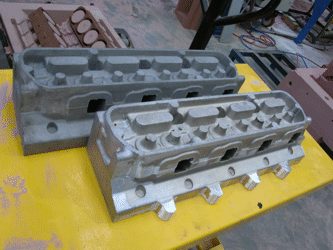
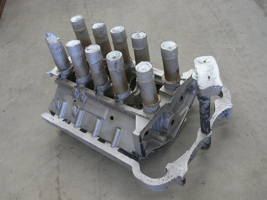
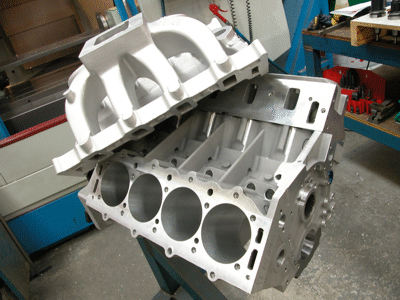
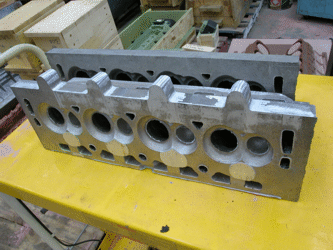
Critics point out that other aftermarket small-blocks can also displace 500 cubic inches. Again, this is true but misleading. Aftermarket Chev blocks don’t take Holden style heads. The price difference between a set of American performance heads and local versions like the ones shown from Yella Terra can be enormous. Yella Terra have, in fact, created a variation of their basic Dash-9 head that’s been altered in a couple of areas to make it compatible with the improved features of the Torque-Power block. Specifically, the basic Holden engine design has always suffered from too few head bolts with just four for each cylinder, so the new block has added another two next to each cylinder. The extra bosses for these studs can be seen in the valley and just outboard of the cylinders on the outside of the engine. We also visited Yella Terra’s foundry and you can see where the company has added matching bosses to the new heads. Also, the areas under the inlet ports that correspond with the bosses in the valley of the block have been filled in allowing the heads to be clamped at these points. Blown gaskets should be a thing of the past with this new arrangement. Indeed, the extra studs will make the engine much better suited to high-boost supercharged and turbocharged applications. The extra studs mean that a custom gasket is required but this is no trouble because Cometic have agreed to supply a triple layered steel version for the engine. |
|||||||||||||
 |
|||||||||||||
|
Although the advantages listed to this point are substantial the list still isn’t complete. For instance, the basic price for the block includes a full set of head studs, nuts and washers. Craig points out the importance of using the correct studs. “Ordinary studs aren’t suitable for alloy blocks because the threads aren’t long enough. They can tear the threads right out of the block.” These ones have dog points that control the position of the threads in the block and prevent them from being pre-loaded during assembly, which is extremely important for stability in a highly loaded motor. Down at the bottom of the engine the caps are, as you’d expect, custom cut four-bolt steel units. However, unlike Chev blocks all of the caps have four studs including the front and rear units. Two of the studs in the rear are actually half-inch types. All the other studs, top and bottom, are 7/16” in diameter. |
|||||||||||||
 |
|||||||||||||
| Strengthening a VN block calls for grouting in the coolant jacket and this also adds to the expense of preparation. The bottom of the Torque-Power block is internally solid right up to the screw-in welsh plugs so the extra strength and rigidity is already built in. As an added bonus all welsh and other plugs are supplied with the block so you don’t have to run around getting bits and pieces to finish things off. Want more? There is more. | |||||||||||||
| STEAK
KNIVES
Maintaining oil in the right locations in a performance motor is obviously vital. Both Chevs and Holdens have problems in this area. For those who don’t know, these engines pump too much oil up into the rocker covers in standard form. This takes oil away from the main and rod bearing journals which can be disastrous. The usual solution in the Holden is to sleeve the lifter bores with bronze inserts containing restricting holes that limit the passage of oil into the lifters, up the pushrods and into the rocker area. Again, this increases preparation costs. A bit of careful planning can avoid the whole problem in the first place and that’s what’s been done in this engine. Oil from the pump passes out into a remote filter and then back into whichever end of the block is preferred. At the point where the oil re-enters a restrictor plug with a metering hole is fitted to the end of each lifter gallery and these restrict flow forcing most of the oil down into the crank in one neat step. Craig says he specified an external oil filter because most competition cars use them anyway and the position of the filter in a standard block often presents an obstacle that makes it even more difficult to achieve the optimum exhaust configuration.
|
|||||||||||||
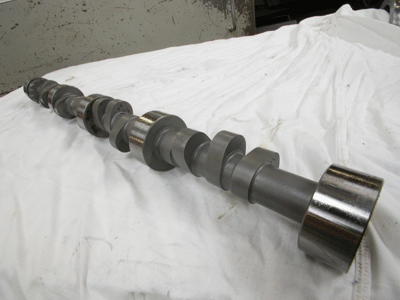 |
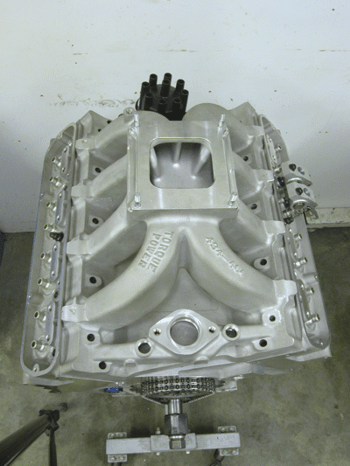
Designing a new engine like this offers an opportunity to make all sorts of improvements and Torque-Power hasn’t wasted the chance. For instance, cam bearing journals have to be cut in the casting. Craig figured that since it was being done anyway there wasn’t much reason they shouldn’t be sized to suit roller bearings instead of standard types. This is the system used in all high-performance V8 race engines and in this engine the roller bearings are standard and included in the price of the block. Apart from handling the stress of high spring rates better, roller cam bearings also require very little oil. Again, that means more of it for the crankshaft. Of course the hybrid nature of this engine means that the cam, too, has to be a combination of Holden and Chev. As we said, the journals have been ground to size for the roller bearings but the lobes obviously suit the Holden valve configuration and firing order. The fact that the oil pump drive and distributor run from the same location means that only the rear end of the cam needs a gear. Given that it’s a steel camshaft this means that only one bronze gear is needed instead of the two required in a roller cammed Holden. The other advantage is that now the oil pump can be hand primed which isn’t possible with a Holden and has always been a pain. The manifold shown has been specifically designed for these heads on motors of approximately mid-four hundred displacement. However, the larger displacements that can be achieved with this engine will call for bigger ports and a correspondingly larger manifold. That’s all in development as we speak. Little touches. If enough of them are present they can add up to big changes and we’d have to say that’s a part of what’s happened here. However, the conceptual difference between this engine and other evolutionary projects in the performance world is that the cumulative effect of all the small changes in this motor are an addition to the really large changes on which the whole design is based. That’s to say, this engine is both evolutionary and revolutionary. The total effect is probably going to be a major alteration to the way in which high-end GM style performance engines will be built in this country in the future. There’s still a great deal more to say and see regarding this engine but we’ll leave it for the next article when we take a look at how the finished block and components bolt together. |
||||||||||||
 |
|||||||||||||
| Really, Torque-Power should throw in a set of steak knives to complete the package because there doesn’t seem to be much else that can be included. Torque-Power.com.au is the website or you can call 0419 359 143 or 03 5248 5668. | |||||||||||||