 |
 |
||||||||||||||||
 |
|||||||||||||||||
 |
|
||||||||||||||||
 |
|||||||||||||||||
HQ-WB
Single Plane Manifold |
 |
||||||||||||||||
 |
|||||||||||||||||
 |
|||||||||||||||||
 |
|||||||||||||||||
 |
|||||||||||||||||
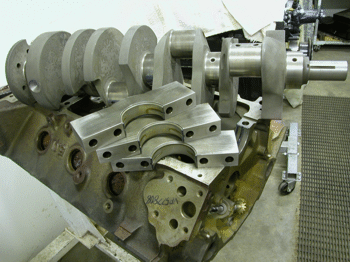
ASTHMA ATTACKED Back in the days of the B-cast Holden head there weren’t nearly as many bolt-on performance options as there are now. So people ground away at what they had to work with and as a consequence the port shaping techniques that extract maximum power from these heads have become fairly well known. Of course, the problem is that maximum power from an engine fitted with B-cast heads isn’t really that impressive by today’s standards. If you stick with the early heads the reality is that you won’t get all that much more than mid four hundred horsepower, and an engine making that would be a pretty hot version. One alternative is the well known swap to VN heads but depending where the job is done, and what is done, that approach can cost as much as several thousand dollars. Torque-Power (the company building the Holden/Chev composite V8 we showed you last edition) has developed an alternative package for the early Holden V8 that gives substantially more power for considerably less money than a VN swap. The improved package uses Yella Terra aluminium Dash-3 heads as part of a composite upgrade from original B-cast heads. The reason B-cast
heads are so restrictive lies in the fact that the design was originally
made to fit the 253 rather than the 308. This, of course, meant smaller
runners and the B-cast only flows about 100cfm in each port. Yella Terra
offered changeover large-valve heads which helped a little but Craig
(from Torque-Power) points out that the iron head has limitations beyond
the basic inlet valve size. |
 |
||||||||||||||||
 |
|||||||||||||||||
 |
|||||||||||||||||
 |
|||||||||||||||||
 |
|||||||||||||||||
 |
|||||||||||||||||
 |
|||||||||||||||||
 |
|||||||||||||||||
 |
|||||||||||||||||
 |
|||||||||||||||||
 |
|||||||||||||||||
 |
|||||||||||||||||
 |
|||||||||||||||||
 |
 |
||||||||||||||||
| OLD
HEADS ARE HISTORY
In making the 308, Holden simply increased the bore of the engine and put a dish in the piston to reduce compression while leaving the chamber volume as it was at about 58cc. The standard inlet runner volume was still only around 105cc which created the flow problem mentioned. A major port job can open the runners up to around 135-140cc but it’s a lot of work and can cost up to $2000. The Edelbrock Torker manifold was introduced to match this sort of port work and as such it’s a good bit of equipment that makes the most of the B-cast head. “However, you’re still stuck with the 140cc runner volume which just isn’t enough to make power”, Craig said. He continued, “Apart from the runner volume, there isn’t enough short-turn. It’s too flat and as revs rise and air speeds up it doesn’t want to turn the corner”. Yella Terra understood these difficulties which is why the company introduced its Dash-3 heads. Its ports feature the larger volumes and improved profiles needed to increase flow considerably. Although the Dash-3 head is good, the Torker has still been about the only choice in manifolds because everyone’s development efforts have been focussed on the EFI heads. In Craig’s opinion, this has prevented the Dash-3 head from achieving its full potential. The standard
runner volumes in VN EFI heads are about 152cc, and flows enough cfm
for around 460hp. As we mentioned, getting this much flow from B-cast
heads is very difficult. Further modification increases the EFI head
potential even more which, combined with the selection of manifolds
available for them, is why people make the swap. But the upgrade has
a cost. The improved port layout means that bolting a set of these heads
onto an early motor means that the cam, lifters, rockers, headers, rocker
covers and the manifold all have to be replaced. And there’s the
purchase price of the heads too. |
|||||||||||||||||
| WHAT’S
YOUR PROBLEM?
To summarize the problems described so far, sticking
with B-cast heads limits top-end power. Even fully ported units fed
by a Torker aren’t up to current power standards. Changing to
Dash-3 heads doesn’t improve things as much as it should because
the Torker then becomes a restriction. The problems become even worse
on strokers like 383ci unit featured here. Abandoning the early layout
and changing to EFI heads is expensive although definitely worthwhile
in terms of power. There is, however, another issue involved. Craig
says that quite a number of the people he speaks to with early engines
in early cars say that they don’t want to change under-bonnet
appearances by adopting the EFI port layout. The Torque-Power kit featured
here deals with all these problems and also provides some other improvements
that we’ll get to shortly. |
 |
||||||||||||||||
 |
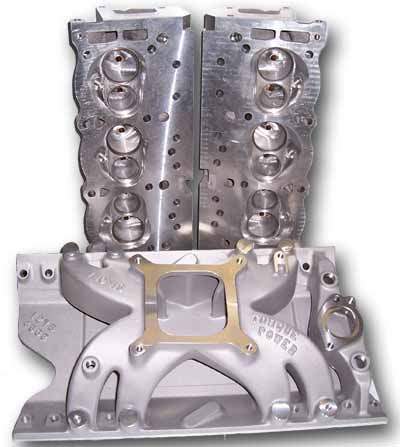
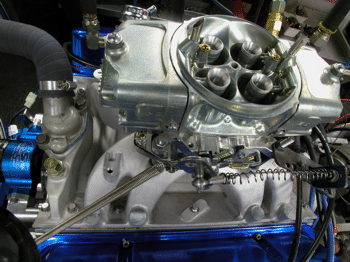
Because of the restrictions imposed by the Torker, Torque-Power introduced the single-plain manifold shown to suit the Dash-3 head some time ago. It’s a combination that’s been proven to work well and sales of both heads and manifolds have been steady around the country. Everyone seems fairly happy with the results. The boys at the 308 Shop report that it even picks up power on old Dash-1 heads. With the Dash-3 it really comes into its own. The thing is, although Dash-3 heads are good straight out of the box in mid-range applications, they need fairly extensive porting to deliver their absolute best. They were designed this way on purpose so that people could choose their own porter to work his magic on them in the pursuit of big power figures. As with any heads, maximum hand-porting a set of Dash-3 heads can cost as much as a couple of thousand dollars. | ||||||||||||||||
| A
STORM ABOUT PORTS
Now, there’s
no doubt that hand porting from a reputable operator is the path to
power. But in this age of rapidly accelerating technology a controversial
question has been raised: Is hand porting better than the work of a
CNC machine? First considerations would tend to suggest that it is.
After all, the ports carved out by CNC machines have to be created by
talented porters first and then digitised (measured) before a machine
can reproduce them. Without further human input a machine can’t
actually improve on the original port design (although that probably
won’t be true for much longer given the flow analysis software
that’s available). However, one thing at which a machine excels
is repeatability. No human can ever hope to turn out results that are
as consistent as those created by a CNC machine, and having identical
ports and chambers can yield better results than high flow numbers in
a selected port. |
 |
||||||||||||||||
| Years ago, Craig worked for well known American engine builder Ron Shaver. He says that one time they took a truly beautiful set of hand ported heads from a top US operator and compared them with a pair of heads cut on a CNC machine. The chamber shapes, volumes and compression ratios were all the same and so was flow except at top revs where the hand ported units flowed 25hp more than the machine cut pair. They did a hot swap on the dyno and despite the superior flow of the hand ported heads, the CNC prepped units made another 7 to 8lbs/ft and 10hp on average. Another time, Craig explained, they tested two pairs of Sprint Car heads that had identical flow right through the whole rev range. “They were exactly the same; there was no difference. But the CNC units turned out 25hp more than the hand worked versions.” He points out that “Consistency is everything.” | |||||||||||||||||
 |
|||||||||||||||||
|
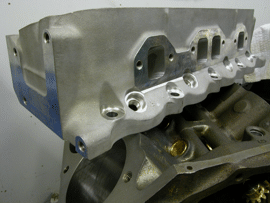
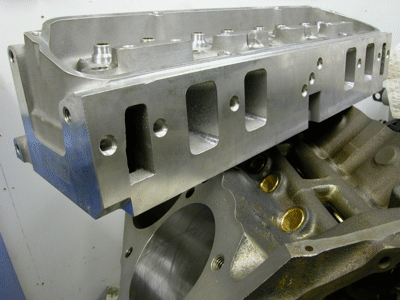
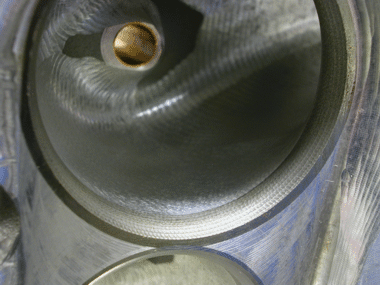
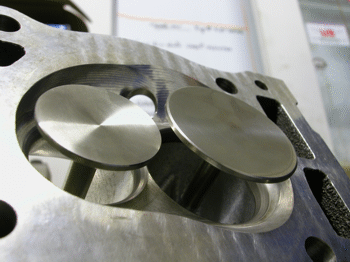
The foregoing is why Craig opted for CNC porting on the Dash-3 units supplied with this upgrade. The initial port design was created by a guy called Flav at Micron Competition Engines in South Australia. The work is extensive although things weren’t taken as far as they could have been. In fact, you can see in some of the shots that there’s still some original metal left that the machine didn’t touch. This is because the upgrade has to service a broad range of requirements in the market place. Maximizing the port volumes would have made more power but at the expense of lower end performance. A good porter could open them out a bit more and get maximum flow for an all out application if street drivability wasn’t so important. |
|||||||||||||||||
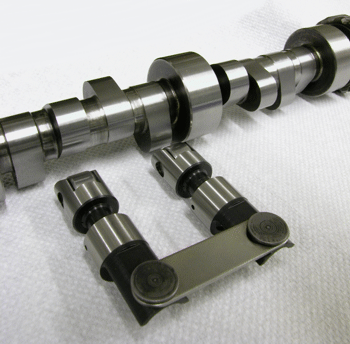
| In the upgrade as sold by Torque-Power, the inlet valves are 2.05” units which are less of a squeeze in the Dash-3 than 2.08” sizes. Exhausts are 1.60” in diameter and the volume in the hot holes from the backs of the valves to the gasket face is 78cc. The inlets are 186cc and flow 550cfm @0.600” lift. As things stand, the CNC port jobs flow just a touch under Flav’s hand work but all the ports are identical. The chambers each measure 61cc and 12:1 is the compression ratio used in this engine. Craig set compression this high for a couple of reasons. First, he wanted to see how alcohol would compare to premium pump fuel and higher compression was needed to give the alcohol a chance. Second, he wanted to demonstrate that compression this high is perfectly fine with pump fuel as long as the cam is right. In fact, longer duration, high-lift cams like this need high compression because the overlap bleeds off cylinder fill. | |||||||||||||||||
 |
|||||||||||||||||
 |
|||||||||||||||||
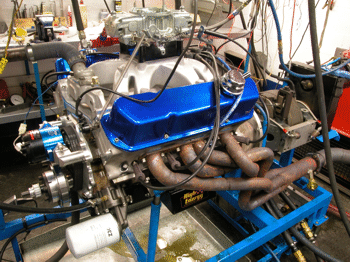
| DYNO
TESTING Dyno
testing was carried out at the workshop of well known engine builder
John Sidney. It was a touch lean at first but going up two jet sizes
front and rear fixed that. Detonation didn’t occur until 27 degrees
total advance. At that point they pulled it back to a comparatively
safe 24 degrees and started the power runs. Final figures were 494lbs/ft
at 5400rpm and 572hp at 6600rpm on premium unleaded. |
|||||||||||||||||
| WRAP
IT UP, I’LL TAKE IT
As we mentioned, upgrading from B-cast heads to VN types with a good manifold can cost several thousand dollars or more. This head/manifold package comes in at $4825 complete. Included in the price is a brand new pair of CNC ported Dash-3 Yella Terra aluminium heads with guides fitted and seats cut, and a Torque-Power single plain manifold. The swap is relatively easy. Just un-bolt your pipes, remove your rocker covers, rockers, collets, retainers, springs and transfer the valve gear (including exhaust valves if they’re in good shape) to the new heads. All you’ll need to buy is a set of 2.05” inlet valves which may drop straight in, although you’ll have to blue them to check if they’ll need regrinding to true them up for a good seal. If your cam duration
is more than 250 degrees at 0.050” then it will work with this
combination and it’ll be a matter of just bolting the new heads
and manifold on to the engine and re-attaching the pipes. Of course,
you’ll have to check that your geometry is right. If that’s
beyond you someone else will have to do it for you but that shouldn’t
cost too much. Your original rocker covers will bolt back on. If this
kit doesn’t create an extra seventy or eighty horsepower straight
out of the box there’s something wrong. If you already have 430
to 440hp you should go past five hundred and do so easily. |
|||||||||||||||||
 |
|||||||||||||||||